
Biography
OBONG AKPAN ISEMIN: A PHILOSOPHER AHEAD OF HIS TIME

Long before he became the first elected civilian Governor of Akwa Ibom State, Obong Akpan Isemin had already built a career that brought together economics, business, the oil industry, management and public affairs.
Economist, businessman, administrator, politician, traditional leader and statesman, he belonged to the generation of Akwa Ibom people whose professional experiences outside government prepared them for the enormous task of building a young State.
His tenure as Governor was brief, lasting from January 2, 1992 to November 1993. Yet, his contribution to the progress and growth of the State went beyond its duration.
As the first elected civilian Governor of Akwa Ibom State, Obong Akpan Isemin represented the return of democratic government to the State after years of military administration and became one of the foundational figures in the early political history of Akwa Ibom.
His story, however, goes beyond the office he once occupied.It is the story of a professional who moved from the classroom into the oil industry, from business into public affairs and eventually into politics, bringing with him a philosophy of leadership that emphasised inclusion, enterprise, self-belief and the collective development of Akwa Ibom.
Akpan Isemin was born on October 5, 1939, in Mbioto, in present day Etinan Local Government Area.
He began his education at Mbioto I Primary School and subsequently attended Etinan Institute for his secondary education.
He proceeded to the University of Nigeria, Nsukka, where he studied Economics and obtained a Bachelor of Science degree.
His academic training in economics would later become an important part of his approach to business and governance.
After his education, Isemin began his professional career as a teacher at Enitona High School in Port Harcourt before moving into the corporate and oil sectors.
He worked with Agip and Esso Standard and later joined Avery Nigeria Limited in 1969 as a Sales Executive. Over the years, he rose through the organisation and eventually became an Executive Director before retiring.
He also contributed to public discourse through his writings, including a column in the Business Times.By the time he entered politics, therefore, Akpan Isemin was not a career politician.He was an economist and businessman with considerable experience in the private sector, corporate management and the Nigerian economy.
He came into government with the instincts of a businessman, the analytical training of an economist and the experience of a corporate executive. His approach to governance was therefore shaped not only by politics but also by questions of productivity, enterprise, resource allocation and the capacity of individuals and institutions to create wealth.
Akwa Ibom State had been created on September 23, 1987, from the former Cross River State.For its first years, the State was administered under military rule. It was still a young political entity, struggling to establish its identity, institutions and economic base.
The return to democratic rule in 1991 therefore represented more than an electoral exercise.It was an opportunity for the people of the new State to begin determining the direction of their own affairs.
In the December 14, 1991 gubernatorial election conducted as part of Nigeria’s Third Republic, Obong Akpan Isemin contested on the platform of the National Republican Convention, NRC against Obong Ekong Etuk of the Social Democratic Party, SDP.
He emerged victorious and was inaugurated on January 2, 1992, becoming the first elected civilian Governor of Akwa Ibom State.
His emergence marked an important transition in the history of Akwa Ibom.For the first time since the creation of the State, its people had elected their own civilian political leadership.
Obong Akpan Isemin therefore inherited a young State still struggling with the challenges of limited resources, weak infrastructure, rural poverty and the need to establish an effective administrative and economic foundation.His administration was also structured around the principle that the new State could not afford to reproduce the old politics of exclusion.
That philosophy would eventually find expression in one of the most memorable concepts associated with his leadership: Ubom Noah ( Noah’s Ark).
One of his most enduring contributions was not a physical project.It was a battle of the mind.
Obong Akpan Isemin recognised that the development of a people could not be separated from the way that people saw themselves.
He therefore challenged what he described as the “Etok Syndrome”, or “Etok Etok” mentality, a mindset of smallness, low expectation and settling for less.
The word etok connotes something small or little. In Isemin’s political philosophy, however, it became much more than a word.It became a description of a psychological condition.He believed that too many Akwa Ibom people had been conditioned to think in small measures, to accept whatever little opportunity came their way, to doubt their own capacity for greatness and, sometimes, to regard menial or subordinate positions as the natural limits of their aspirations.
The philosophy of his administration therefore challenged Akwa Ibom sons and daughters to think bigger, aspire higher and reject the mentality of settling for crumbs.Contemporary accounts of his administration describe this as a deliberate effort to make the people abandon the “Etok Syndrome” and develop a new consciousness of their capacity to achieve. His philosophy was remembered as an invitation to Akwa Ibom people to dream beyond inherited limitations.
For Isemin, therefore, development was not simply about constructing roads, providing water or increasing government revenue.It was also about reconstructing the mindset of the people.He wanted Akwa Ibom people to see themselves as capable of occupying important positions, building businesses, creating wealth and competing successfully beyond the boundaries of the State.He wanted the young man in Akwa Ibom to understand that he did not have to remain a houseboy, servant, gateman or subordinate simply because that was what society had come to expect.He wanted the educated to think beyond securing government employment.He wanted entrepreneurs to think beyond subsistence.He wanted professionals to see themselves as capable of operating at the highest levels of their professions.
And, above all, he wanted Akwa Ibom people to stop measuring their possibilities by the limitations of the past.In that sense, the Etok Syndrome philosophy was an early programme of psychological and attitudinal re-orientation.
It sought to replace a culture of limitation with one of possibility.
It was a philosophy ahead of its time.
Decades later, the language of self -belief, attitudinal change, enterprise and the rejection of limiting mindsets would again become prominent in Akwa Ibom’s development discourse through later initiatives such as the Attitudinal Re-orientation campaign of the Victor Attah years, the fight against the House help Syndrome of the Godswill Akpabio years, the Dakkada philosophy of the Udom Emmanuel years and the Arise mantra of the Umo Eno administration.
Although expressed in different language and under different administrations, the underlying message of rising above limitation echoed a question that Isemin had posed much earlier:Why should Akwa Ibom people settle for less when they were capable of achieving more?
Alongside the Etok Syndrome philosophy was another important idea associated with Isemin’s administration: “Ubom Noah” – Noah’s Ark.The concept suggested that Akwa Ibom should be a State large enough to accommodate everybody.Regardless of ethnic origin, political affiliation or social background, people should have a place in the development of the State.The metaphor was simple but powerful.Noah’s Ark was large enough to carry people and animals of different kinds through the storm. In Isemin’s political imagination, Akwa Ibom should similarly be an ark in which nobody was deliberately left behind.
The philosophy reflected his belief in inclusive governance and was expressed through the diversity of people associated with his administration.His political orientation sought to look beyond narrow ethnic and partisan calculations. Accounts of the period specifically associate the Ubom Noah philosophy with giving people opportunities regardless of ethnic origin and with appointments reflecting the diversity of the State.
Isemin’s answer was not to pretend that differences did not exist.Rather, it was to insist that they should not become barriers to participation.
For him, Akwa Ibom’s diversity was an asset that could be harnessed for collective development.
Isemin also understood that political independence without financial capacity would leave the new State vulnerable.A young State needed money to build schools, roads, hospitals, administrative institutions and other infrastructure.
One of the important achievements attributed to his administration was his effort to improve the State’s financial allocation from the Federal Government.
Historical accounts state that he successfully persuaded the Federal Government to increase Akwa Ibom’s monthly oil-revenue allocation from about N350,000 to N11.2 million.
The achievement demonstrated an understanding of the relationship between political leadership and economic negotiation.
Isemin recognised that a State located in an oil-producing region could not build its future on inadequate allocations.He therefore approached the Federal Government with the argument that Akwa Ibom required resources commensurate with its developmental needs and its contribution to the national economy.In this respect, the economist and businessman in him became visible in the Governor.
But Isemin’s experiment in democratic governance did not last long.The Third Republic itself was short-lived.On November 17, 1993, the military again intervened in Nigerian politics, bringing the democratic experiment to an abrupt end. Isemin’s elected administration was consequently terminated and the State returned to military administration.
The end of his governorship did not end Obong Akpan Isemin’s political ambitions.
When democratic government returned in 1999, he returned to the political arena.He contested the governorship again, this time on the platform of the All People’s Party, but lost the election to Obong Victor Attah, who became Governor in May 1999.
The defeat did not remove Isemin from public life.In 2003, he sought election to the Senate on the platform of the All Nigeria People’s Party, but was unsuccessful.
He subsequently joined the Peoples Democratic Party, remaining involved in political and public affairs until his later years.
Beyond partisan politics, Obong Akpan Isemin also occupied an important place in traditional and cultural affairs.He held the title of Obong Ikpa Isong Ibibio, placing him within the traditional leadership structure of the Ibibio people.
He was also an elder whose influence extended into the traditional institution and the wider cultural life of his people.
The final chapter of Isemin’s life came in 2009.He died on June 23, 2009, at the age of about 69.
When Akpan Isemin was laid to rest in August 2009, he received a state burial. Family members, political associates and citizens came together to honour the man who had occupied a unique place in the State’s history.
As Akwa Ibom celebrates its 39th anniversary, Obong Akpan Isemin is remembered as a HERO who helped imagine and define how Akwa Ibom could become what it is today.
#AkwaIbomAt39
#IbomLeadingLights
#CelebratingOurHeroes
#39Heroes39Prides
#HeroAkpanIsemin
#The39thAnniversaryCollectives
#AkwaIbomStateMinistryOfInformation
#AriseAgenda
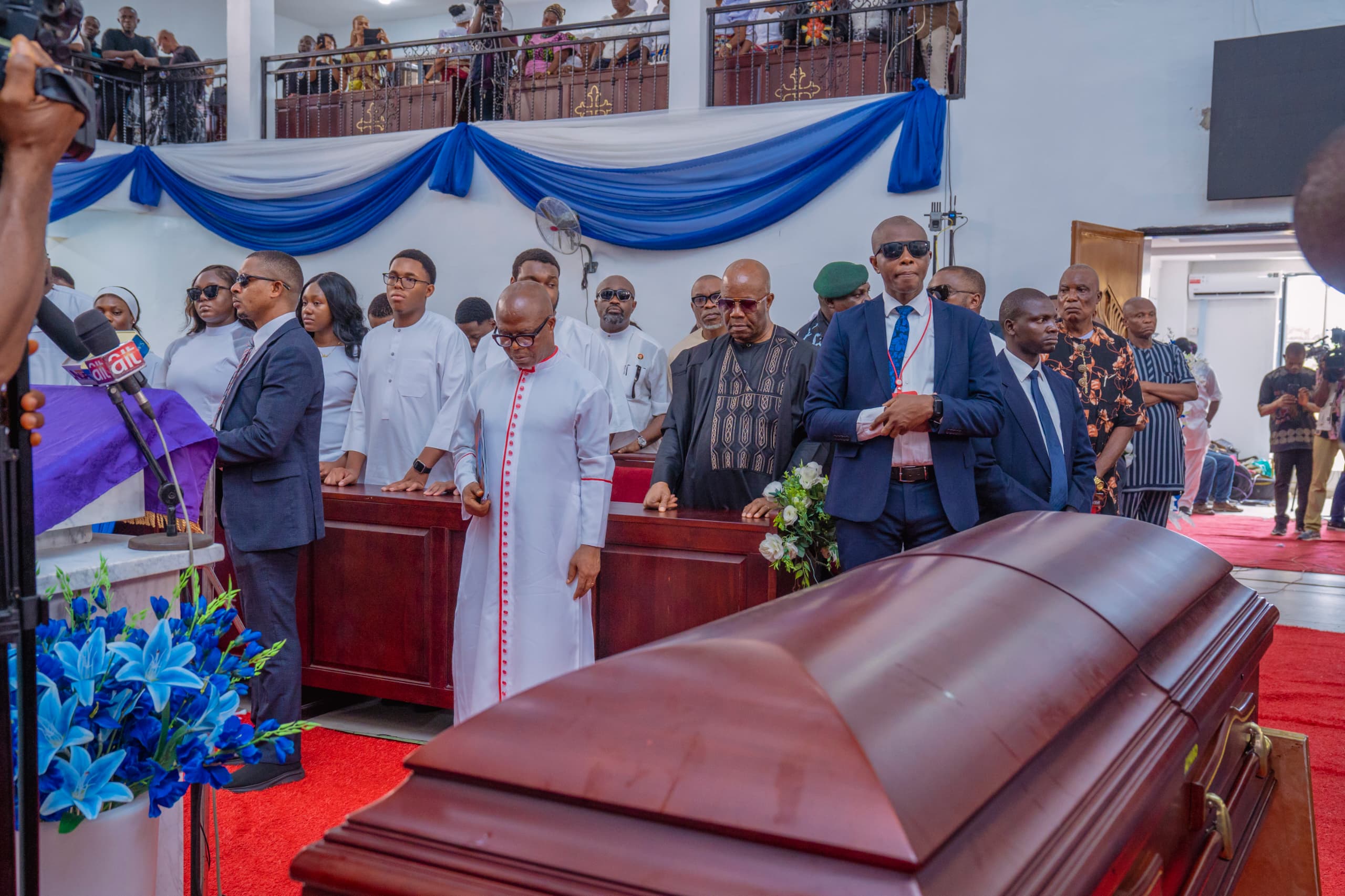
The President of the Senate, Godswill Akpabio has said the late Senator who represented Rivers South East Senatorial District served his people and country with with honour, dignity and unwavering devotion to duty.
Senator Akpabio made the declaration in his tribute at a funeral service held in honour of the late Senator in the Anglican Church in Koroma Tai in Rivers State.
According to Senator Akpabio, “Senator Barinada Mpigi served his people and his country with honour, with dignity, and with unwavering devotion to duty.
In the hallowed Chamber of the Senate, where the affairs of the nation are debated and determined, his voice was steady, his judgment thoughtful , and his commitment to the welfare of his constituents unmistakable.
According to Senator Akpabio, the late Rivers State Senator served with dignity and with conviction mindful that the lives, hopes, and welfare of many were bound up in how faithfully they served.
“He served with loyalty to his people, with fidelity to his conscience, and with faith in the promise of our nation.
“Though we grieve his loss, we remember him as a man who served with honour, who labored with conviction, and who believed in the future of Nigeria. Nigeria misses him. The Senate mourns him. His people remember him. His service remains stenciled in the tablets of time and in our national archives,” Akpabio said.
Until his demise the late Senator Mpigi who represented Rivers South East in the Senate was the Chairman Senate Committee on Works and was reputed to be one of the most influential, outspoken and dedicated Senator in the Nigerian 10th Senate.
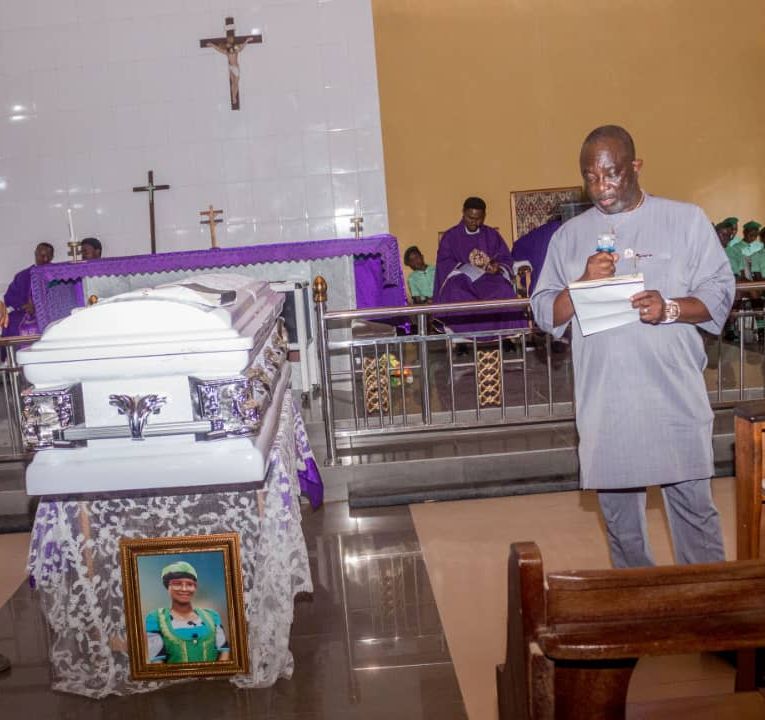
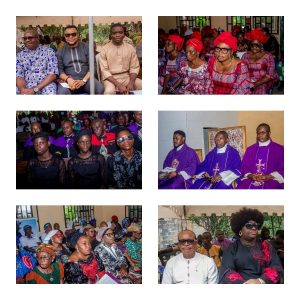
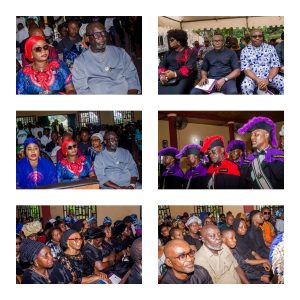
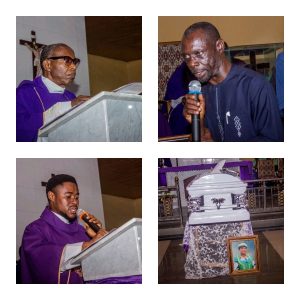
It was a roll call of dignitaries at the funeral service of a political and social activist, Late Lady (Hon) Lawrencia Etuk, held at Holy Family Catholic, Church, Asuna, Etinan Local Government Area.
Late Hon (Mrs) Lawrencia Etuk according to her biography was born in August 1979 to the family of Late Mr and Mrs Raphael Udo Archibong of Nung Nkup Ekong family in Obio Ibiono village, Ibiono Ibom Local Government Area as the youngest child in the family.

She began her primary education at Government Primary School, Osuk Ediene in Ikono Local Government Area, completed her Senior Secondary School at West Itam and obtained National Diploma in Business Studies from Akwa Ibom state polytechnic, Ikot Osurua.
Her quest for further education took her to the University of Uyo where she graduated with a Bachelor’s degree in History and International Studies. Death however cut her dream short from obtaining a Master’s degree in History and International Studies as she did not live to defend her research work.
Her political career started as a member of Akwa Ibom State Patriotic Front (AKPF) and later became the chapter coordinator of Uyai Iban Akwa Ibom in Etinan Local Government Area. She was also a member, National Council of Women Society (NCWS).
Late Hon Lawrencia Etuk was appointed a Supervisor for Women Affairs during the 2011 Transition Government in Etinan Local Government Council and subsequently served in the elected administration within 2012-2014.
Her last political appointment was Secretary in the 2023/2024 Transition Council in Etinan and ended up being an acting Chairman, Etinan Local Government Area where she oversaw the election of the present executive and legislative council in Etinan Local Government Area.
A Christian of the Catholic faith, she was an active member of Catholic Youth Organisation and after marriage she joined the Catholic Women Organisation. In July 2019, Late Hon Mrs Lawrencia Etuk was found worthy by the Holy Catholic Church and consequently honoured her as a Lady of Saint Mulumba Nigeria where she progressively grew to a 2nd Degree Lady in the honoured Order.
In a condolence message delivered to the family, the chairman of Etinan Local Government Area, Hon Uko Umoh, recalled his days with her in the Transition Committee that midwife the present local administration in Etinan and praised her for her strength of character, loyalty and dedication to duties.
“She was the full definition of a good woman, kind, social and loyal in all ramifications with an impeccable character and influence that was profound.
It saddens our heart and that of the entire Council that such a shinning light has been put off by death at a time it should shine brighter.
As we mourn her untimely exit, we take comfort in knowing that while on earth, she lived a life of purpose and service well pleasing to God and humanity. She will be dearly missed”

Late Hon Lady Lawrencia Etuk who was married in 2003 to Mr Benedict Etuk of Ikot Akpanya in Etinan Local Government Area is survived by three children.
Biography
Tinubu, Akpabio, Umo Eno, Mutfwang Honour APC Chairman’s Mother At Funeral
Let this day be one of joy and thanksgiving, even in mourning. The prayer of every mother is that her child succeeds—and you will
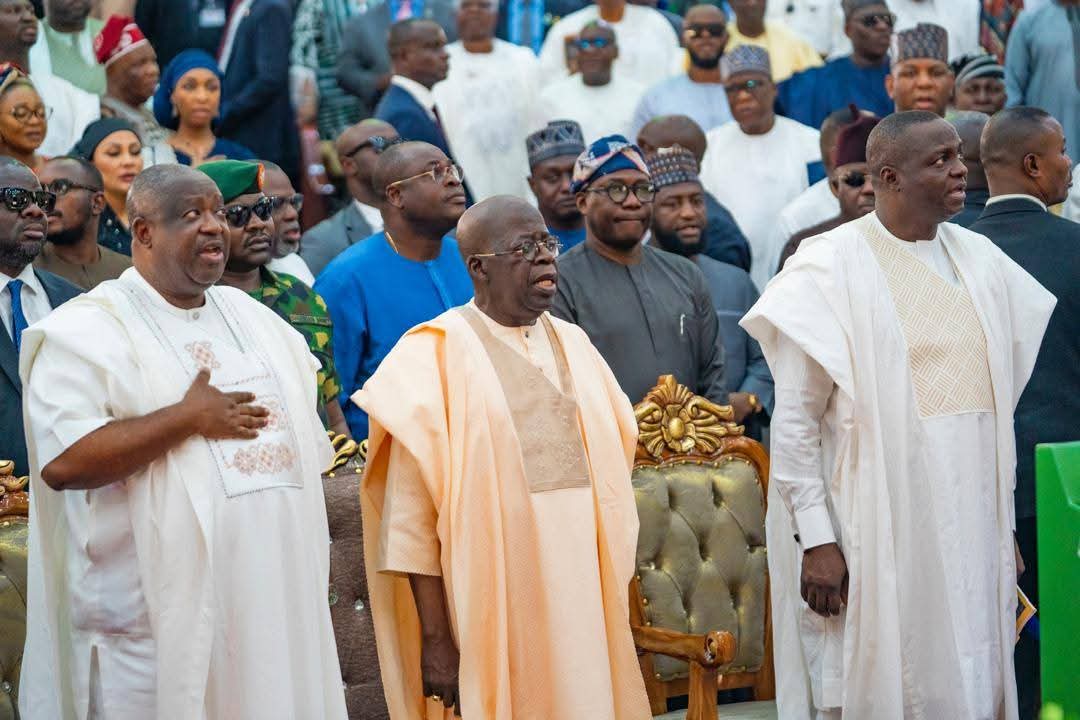
President Bola Ahmed Tinubu, the Senate President Godswill Akpabio and Governor Umo Eno on Saturday joined numerous dignitaries to pay their last respects to Mama Lydia Yilwatda Goshwe, mother of the All Progressives Congress National Chairman, Prof. Nentawe Yilwatda, at her funeral service held at the Church of Christ in Nations headquarters in Jos, the Plateau State capital.
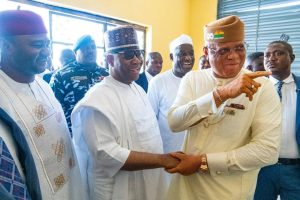
President Tinubu, in his remarks, described the late Mama Lydia as “a mother of the community, a mother of the state, and a humanitarian.”
Tinubu praised the APC National chairman as “a man of character and intellect” and commended the large turnout of governors, public officials, and dignitaries as a testament to the high regard for both the APC National Chairman and his mother.
“Let this day be one of joy and thanksgiving, even in mourning. The prayer of every mother is that her child succeeds—and you will. God will grant your prayers. Live a dedicated life, serve humanity, and remain faithful to God Almighty.”, Tinubu said.
On his part, Senate President Akpabio praised COCIN’s contributions to the North Central region through schools, clinics, and health centers.
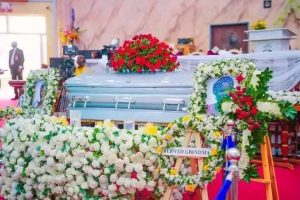
He referenced Prof. Yilwatda’s tribute to his mother, describing her as “a perfect portrait of the virtuous African woman, a true matriarch” who instilled values of humanity, diligence, compassion, and faith. Akpabio commended President Tinubu as “a unifier” who bridges faiths, regions, and political divides, evident from the diverse attendance at the funeral.
Senator Akpabio told President Tinubu that the large turn out of the people who lined up the streets from the airport to the church was a sign that the people of Plateau were happy with the President. “From the airport, I witnessed the youths, women and men line up the streets waving the APC flag to welcome you. This is to show you that they love you and even before the next general elections the entire Plateau is APC,” he said.
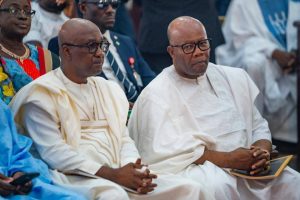
Governor Mutfwang expressed gratitude for President Tinubu’s presence, stating, “Your esteemed presence means so much to the immediate Yilwatda family and to the people of Plateau State in general.”
He thanked the President for his support in addressing insecurity in Plateau State, noting improvements in security conditions.
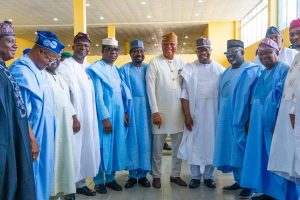
“While we are grateful for the honour of your presence at this solemn occasion, we also look forward to welcoming you again soon, Mr. President. We would be delighted if you could visit Plateau State again in the near future to see for yourself the extent to which we have keyed into your Renewed Hope Agenda with the resources available to us”, Mutfwang said.

AKWA IBOM STATE POLICE COMMAND TASKS OFFICERS ON PROFESSIONALISM, COMPLIANCE WITH IGP’S DIRECTIVES AT A STRATEGIC SECURITY MEETING
POLICE INTENSIFIES FIGHT AGAINST CRIMINAL ELEMENTS IN AKWA IBOM
AKWA IBOM STATE POLICE COMMAND ARRESTS 15 SUSPECTED CULTISTS IN IBENO
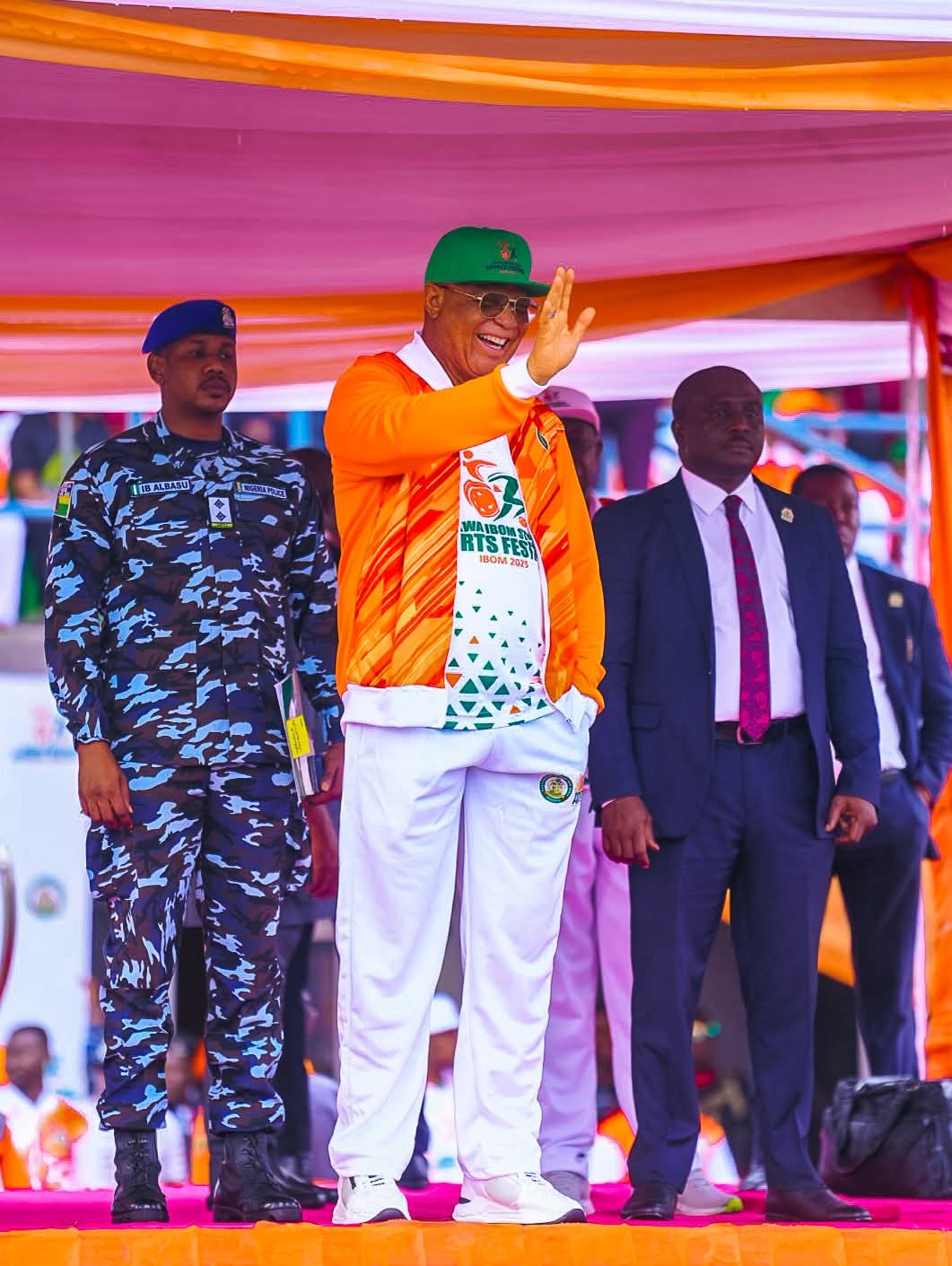
2026 AKWA IBOM SPORTS FESTIVAL: GOVERNOR UMO ENO’S BOLD STEP AT DISCOVERING TOMORROW’S SPORTS STARS TODAY

AKWA IBOM STATE POLICE COMMAND DECORATES TWO NEW ASSISTANT COMMISSIONERS OF POLICE, CONDUCTS HEPATITIS SCREENING FOR PERSONNEL

NYSC Batch B Stream II Orientation Camp opens August 28
-
SPORTS3 months ago
2026 AKWA IBOM SPORTS FESTIVAL: GOVERNOR UMO ENO’S BOLD STEP AT DISCOVERING TOMORROW’S SPORTS STARS TODAY
-
METRO3 months ago
AKWA IBOM STATE POLICE COMMAND DECORATES TWO NEW ASSISTANT COMMISSIONERS OF POLICE, CONDUCTS HEPATITIS SCREENING FOR PERSONNEL
-
NEWS2 years ago
NYSC Batch B Stream II Orientation Camp opens August 28
-
 SPORTS1 year ago
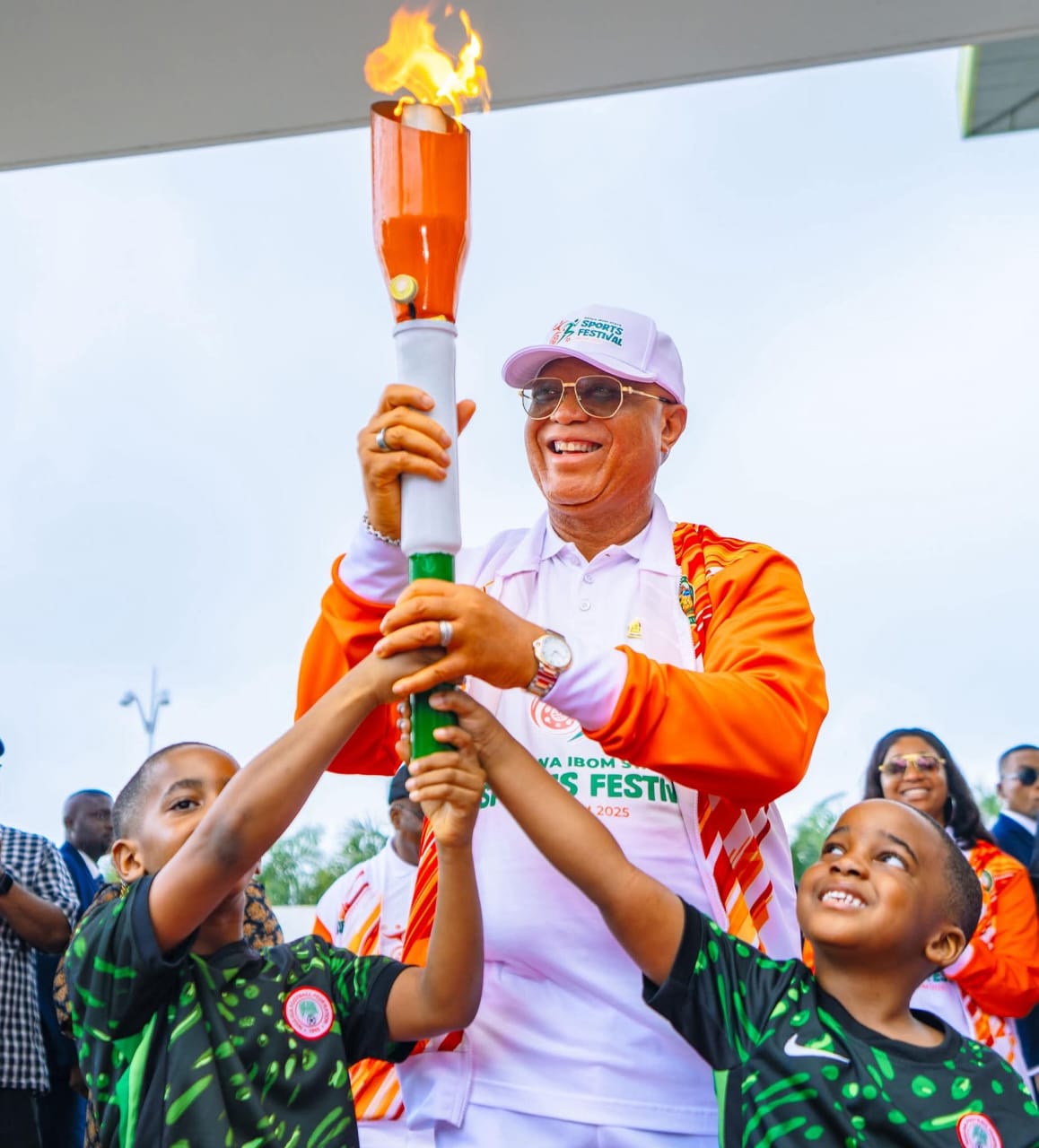
A’IBOM SPORTS FESTIVAL KICKS OFF SEPTEMBER 8
-
SPORTS2 months ago
2nd EDITION OF AKWA IBOM SPORTS FESTIVAL KICKS OFF SEPTEMBER 22 2026
-
 Crime1 year ago
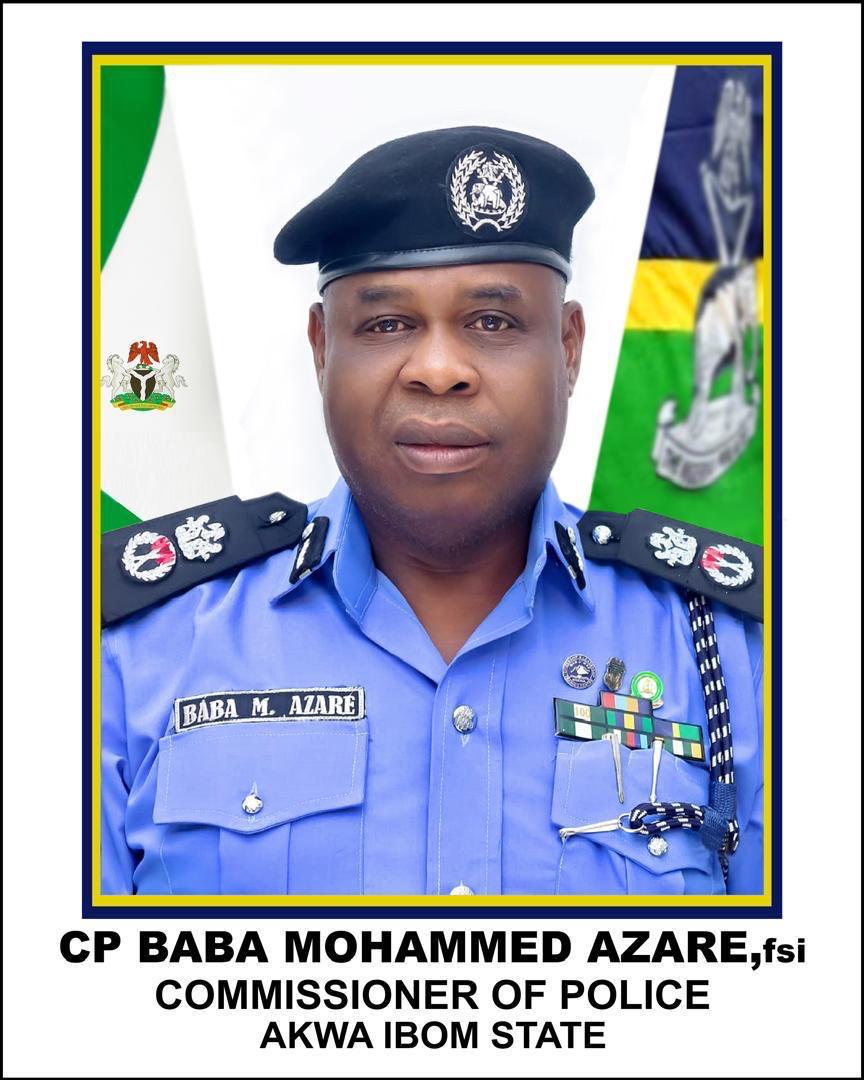
Akwa Ibom Police Command Reels Out Emergency Numbers to the Public
-
 Crime2 months ago
TWO SUSPECTED ARMED ROBBERS LINKED TO MURDER AND KIDNAPPING IN ETINAN IN POLICE NET
-
 SPORTS1 year ago
Akwa Ibom Sports Festival opens in Uyo