
COMMENTARY
Let the Poor Breathe!

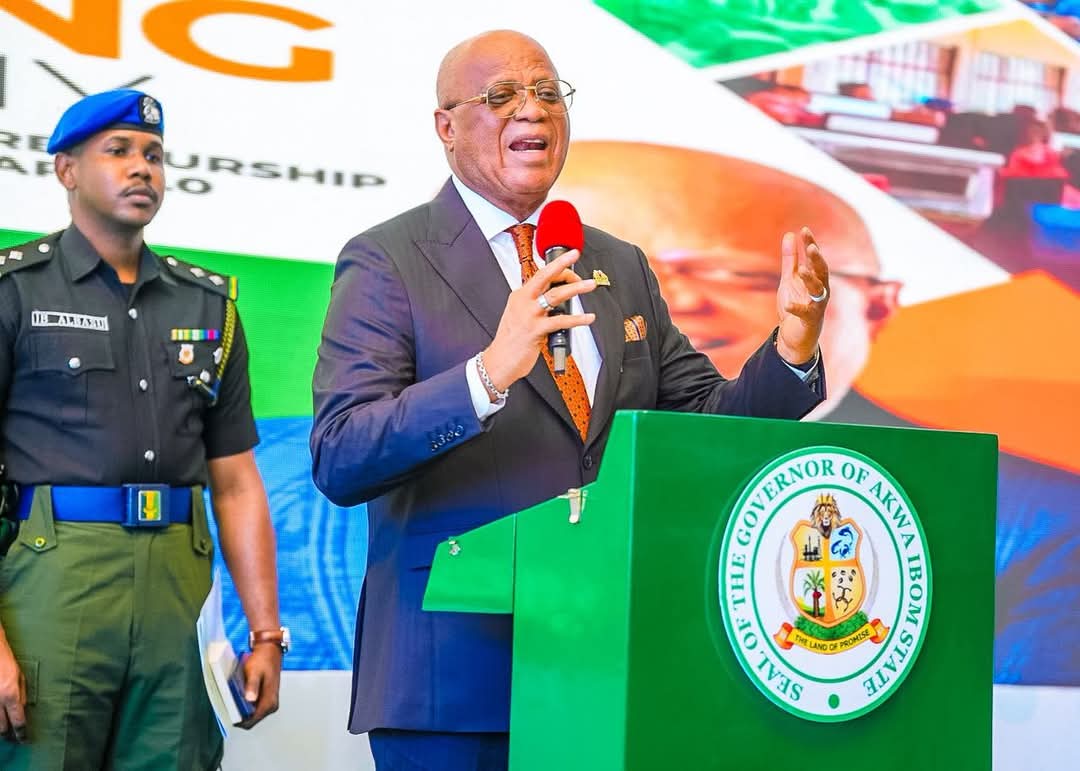
By Umo Eno
My presence here today underscores the importance we place in this Entrepreneurial Leadership Development training.
I came here today as one of you, someone who started a small hotel business in 1996 with five rooms in Eket and by the time I joined the public service, we had expanded and owned many hotel apartments, moved into Uyo, owned properties in Abuja, worked with International Oil Companies, IOCs and became the second largest employer of labour in this State, next only to the State Government.
I could have sent somebody to read a speech and inaugurate your training but I came here personally today to say that you can start small but grow big. I came here to say that, the only thing you start from the top down is digging the grave. Every other thing starts from down and grows up. It’s not about the amount of money that is placed in your hands. It is about the zeal, the conviction, the passion and the discipline that will multiply what is given to you.
The other day I listened to a young man who was literally sleeping in his house when I woke him up to place something very wonderful in his hands. He was given an appointment.
Today I look back thanking God that that happened and he was sitting down in one bar and badmouthing me and saying, how can he think that he can give people just N500,000 to go and do business. What kind of business would he do with such money?
I laughed. Why will he not say so? Because he was woken up from his sleep to be given an appointment. I bought him a car that he didn’t work for and so in that same car, he drives to a place and sits down to drink and feels that life is stress free, a bed of roses.
But when you read Dangote’s biography, his uncle, the late Dantata, gave him a loan of only N500,000. And Dangote today, is the richest man in Africa with a networth of $23.9 billion.
So it’s not the amount of money you get, it is the passion you have for what you’re doing. For over 20 years, those of you who live around Eket will know that my business, my house, and my church are all in one location till this day. I go to church in the morning, do my morning prayers in the same spot, go to work in the same place, get back home in the night in the same spot.
I shunned everything, paid my attention to my business, and grew the business. Anything you don’t have passion for, no matter how much money one puts in there, will not make sense. Everything begins with you.
And when we were growing that business in Eket, we didn’t have any help from the government, not even a local government support. The only help we got, I must confess, was patronages from several people. And then later, the government came and supported us. They patronized us. What I mean is that, they got value for the money they paid us. Did that help us? Yes.
But we didn’t have to beg the government for money. They came at a time when Obong Victor Attah, the then Governor, was to host the global Conference of Mayors in this State. There was no hotel that could rival Royalty Group at that time. And so, the government had to move from Uyo to Eket and made use of that hotel. For one week, we were working 24/7 for a global audience. I worked.
And up to the last day thay I left the Royalty Group for public service, I worked. I go to work in the morning, stay at work, serve, enter the kitchen, understand what’s going on. And I took a special interest in my business. I came here personally at the onset of your entrepreneurial training just to see whether I can inspire you.
I am talking to you without looking at this speech before me because this is a true story. This is a testimony…Modesty will forgive me, I had my own house in the US running my own business. Almost all my children were trained in United States before I came into government. Friends, no one will make it in business without his or her personal efforts.
All of you sitting in this hall and the previous batches that have gone before you, are blessed to have a State, where today you cannot only be trained, but have a seed money handed to you. It is a blessing. It has not always been like this. And so, I encourage you today not to take this for granted. Not to see it as an entitlement, but to see it as an act of God that has made grace available to you. And not to abuse that grace.
I believe N500,000 can change the course of your life for good, if only you are diligent about it. And that’s why we bring you to this development center to be taught how to use money, what to do with the money. A knife in the hand of a doctor will heal, but a knife in the hand of a madman will kill. So, when you are handed money, it depends on who you are and what you do with the money.
Today, in our State, we are very proud in the last two years to say that we have judiciously used the money available to us as a government. I’m proud to say that in the last two years we have not gone to the bank to borrow money, not because borrowing is not good, but because there has been no need for it.
And we have done projects in this State, and we challenge any other State to show us what they’ve done, we’ll roll out what we have achieved. It is because we are prudent. And I understand that some people may not like it, but… today, I have just signed off a supplementary budget of N1.6 trillion. Never in the history of this State have we heard that, and all of that budget is backed up by cash already for projects.
But make no mistake, the money we are using to execute those projects could have gone with overinflated contracts. Road construction have always been the bane of our contracts, but today our contractors know that we’ll scrutinize every quotation they bring. We will match it with quotations from our quantity surveyors. We will tell you why we cannot give you that contract at that rate.
And so we can save our money for Akwa Ibom people, and we can take that money and put it back in your hands, and train you, and start you with some seed fund that we believe can help you. All that I am saying to those who inflate contracts and my appeal to those is power is: Let the poor also breathe…
I had determined in my heart beforehand, before I came into the office as governor that if God gave me the privilege to campaign, and by the support of Akwa Ibom people become the Governor that I would look back at the poor background I came from and ensure that I stand up for them and speak for people like you… So today, I’ve come here to say to you, we’re not just throwing money away. I am saying: Let the poor breathe.
I’m happy with the testimonials I have heard and seen so far. Someone took N500,000 in the last batch and increased the sewing machines in his fashion business? Someone took N500,000, bought a palm kernel cracker to improve his business. Someone took N500, 000 and expanded his farm and someone else expanded his small trading business…
Friends, listen to me, I feel for you. All of you here could have been my children. Each time we go out there for events, it will rain. Everybody will run for cover. But you will remain there under that rain in your orange, purple and other colours, waiting to be paid just N2000 at the end of the event.
I feel for you. You are my children. I could be the father to some of you. I could be the uncle to some of you. And then, I feel in my heart, when you go through these things, so after all of these, after all these drumming and dancing for politicians, what next? Should you not have something that you call your own, that you go back to?
And that’s what inspired me to begin to bring you set by set, under this entrepreneurial training… And that’s why we felt we should be able to make sure you are trained, have some skills in your hands, give you N250,000 to rent shops, and then another N500,000 to stock up the shops. So, please, please, please, see this help as a lifeline.
Invest in the business you are passionate enough to do and enjoy…Friends, let us stop this attitude of believing that people owe you. Life does not owe us anything. Life itself is a struggle. It is only the grace of God that make the difference and stands us out.
And as Apostle Paul said even that grace was followed by hard work. Even with the grace, Paul said he laboured more than all of the Apostles and disciples. So grace is for labour at your work. This is my invitation to you to work hard…This is an opportunity God has brought your way. Take your destiny, your own destiny, in your own hands, friends…
Don’t use your business money to pay tithe. You pay tithe out of your profit… When you can use one Naira well, you can use 10 Naira well. I see millionaires here. But it’s only if you work hard, stay disciplined, deny yourself of some luxuries, stay focused and make some sacrifices that you can breakthrough…
People say politics is tough. I say, politics is not tough. To do business without government money and succeed is tough. Business is a hard thing. There are things, principles you must not falter. You will be taught all of that during your training here…
Try. Move your life up. Pray to God to teach you what to do with this little support from the government. Then you invest it. Before you know it, it will be expanding. God will give you more clarity. God will help you.
Friends, I pray God to lift you up.
Being the speech of Governor Umo Bassey Eno of Akwa Ibom State during the One-day Business Concept Note Workshop & Opening Ceremony for participants of the fourth batch of Entrepreneurship Accelerator Programme in Uyo.

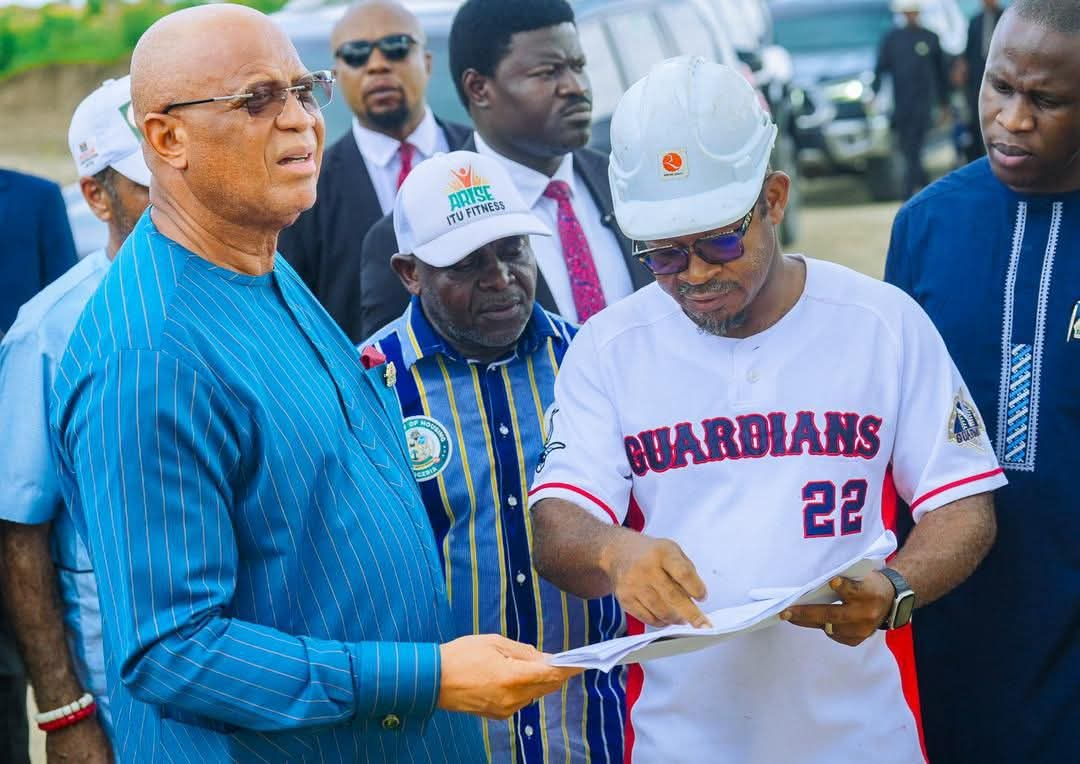
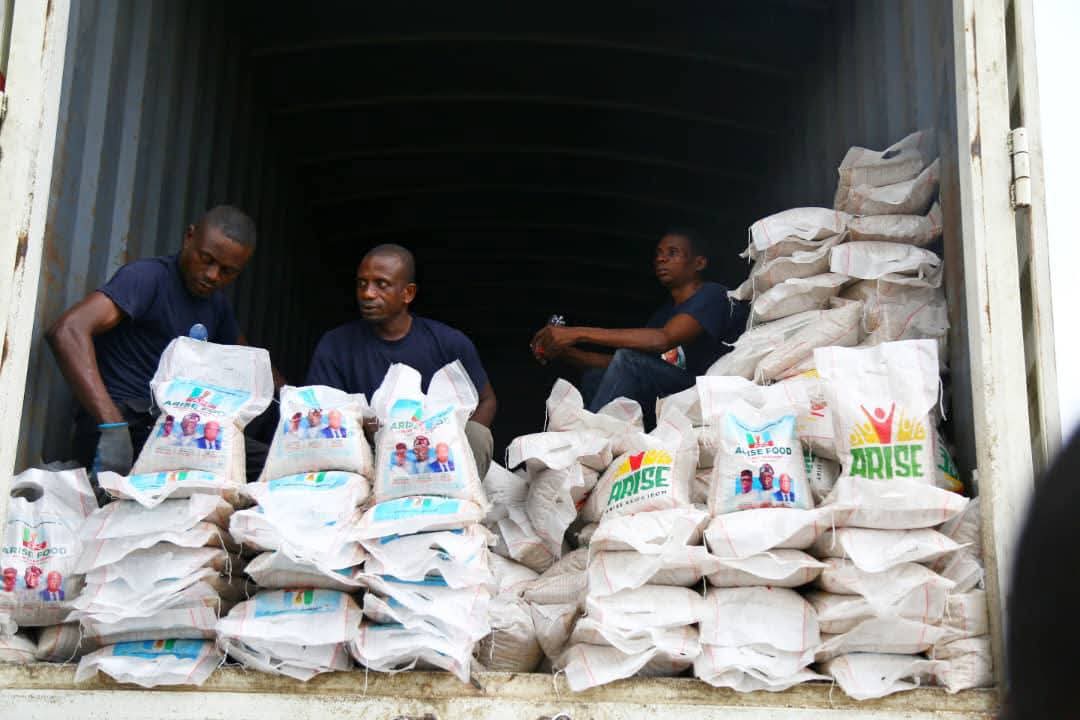
By Lucy Daniel
In a time when many Nigerian families are struggling with rising food prices and economic uncertainty, humanitarian interventions have become more than acts of charity; they have become instruments of social stability. In Akwa Ibom State, one of the most visible examples of this approach is Governor Pastor Umo Bassey Eno’s ARISE Free Food Distribution Programme, a statewide initiative that is gradually redefining the relationship between government and the governed.
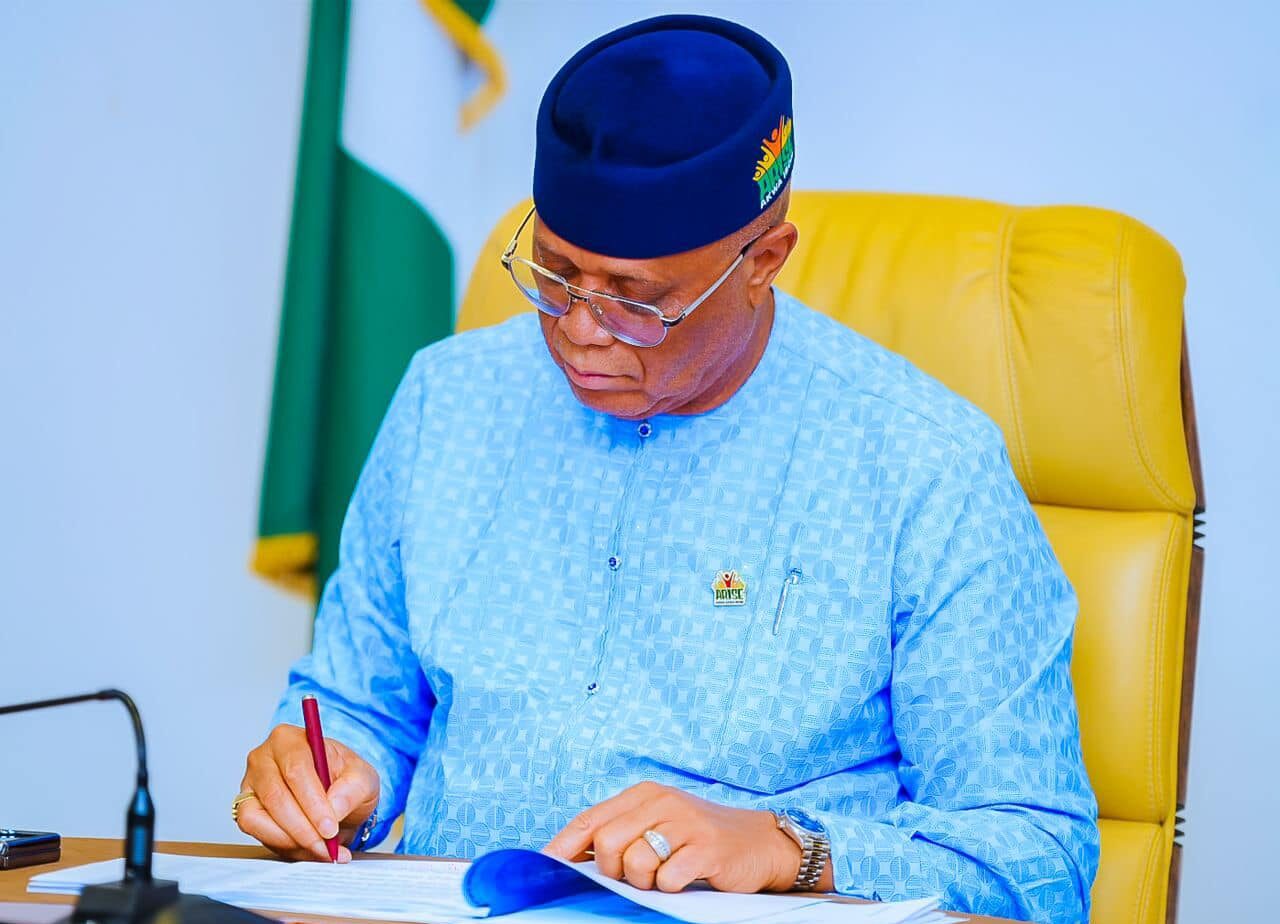
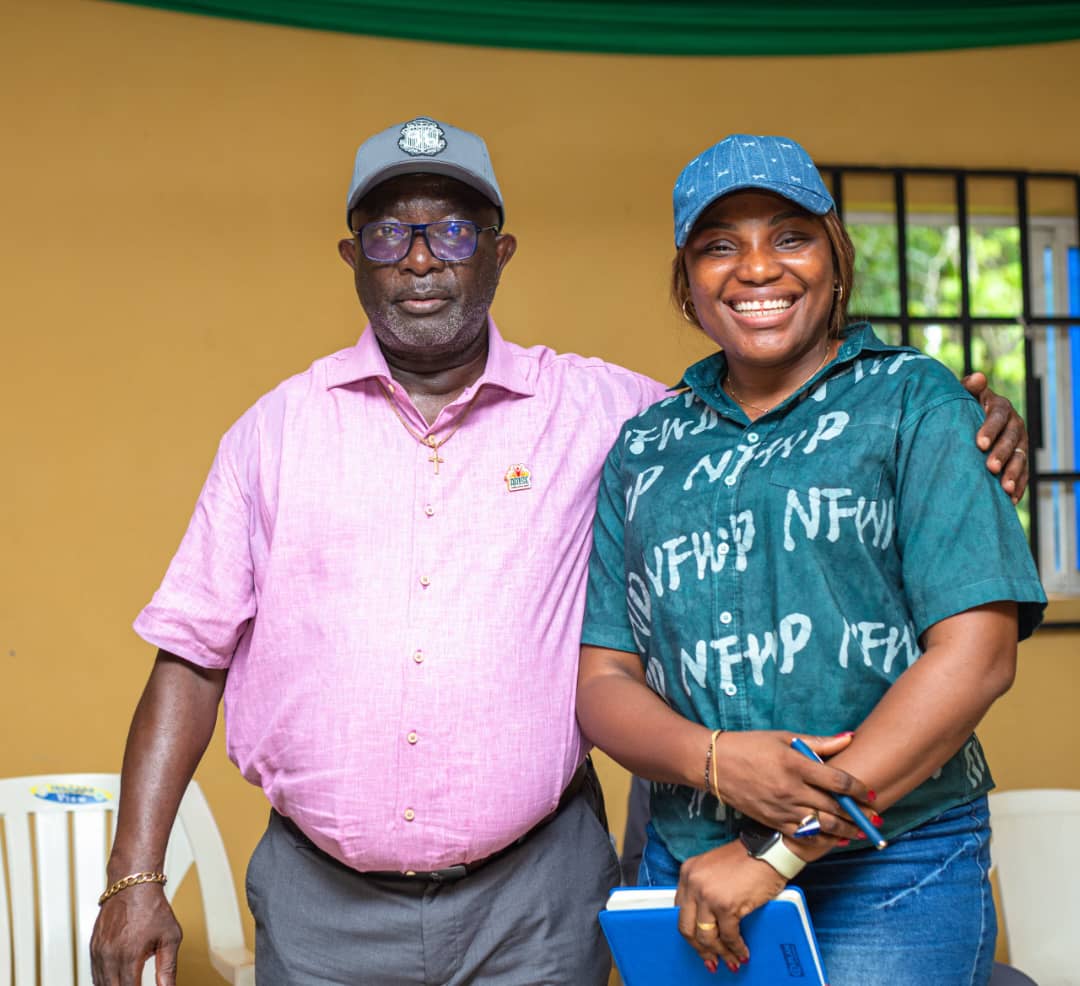
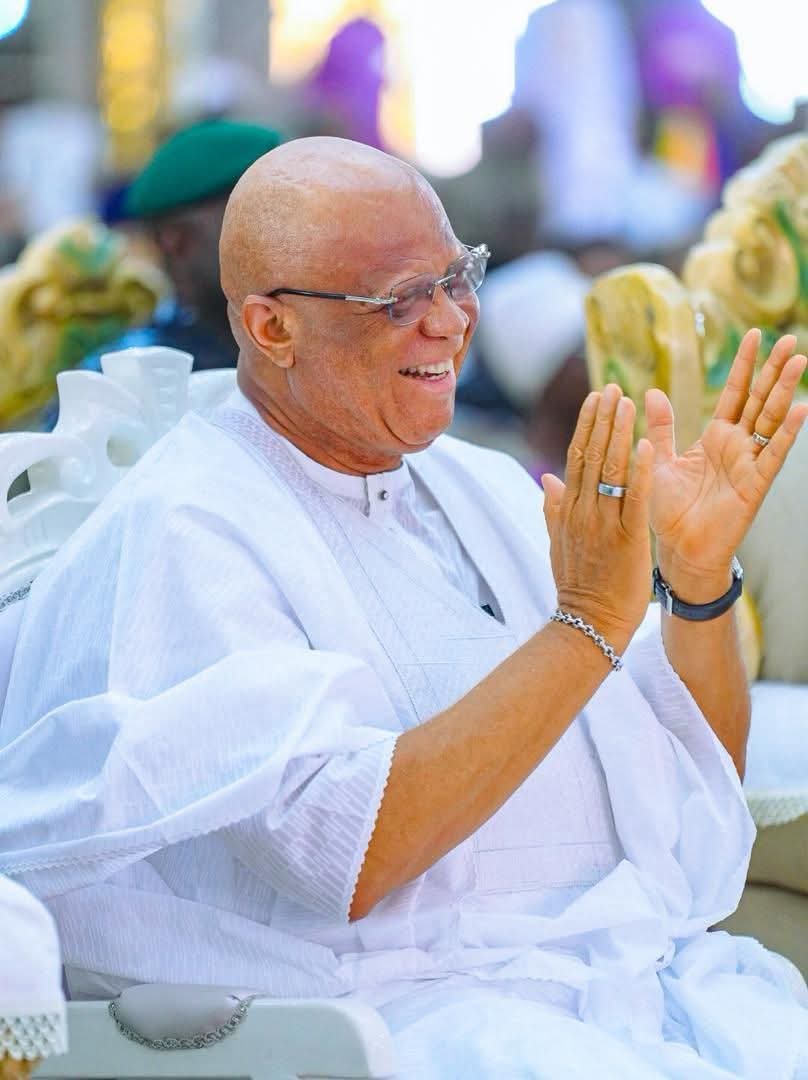
Commissioner for Humanitarian Affairs, Rt.Hon. Emem Ibanga making a presentation to one of the beneficiaries recently
With the fourth phase of the programme now reaching 28 out of the 31 Local Government Areas of the state, the intervention has evolved from a relief measure into one of the largest humanitarian food support programmes by any sub-national government in Nigeria.
The recent distribution exercises in Ibiono Ibom and Itu Local Government Areas offered a clear picture of the programme’s growing reach and impact. In both local governments, 7,000 bags of rice and beans were distributed to vulnerable households identified through the State Social Register. The atmosphere was not merely one of food distribution but of gratitude, hope and renewed confidence in government.
For many beneficiaries, the intervention came at a critical time.
Mrs. Ekaette Udo, a beneficiary in Itu Local Government Area, described the support as a lifeline for families struggling with the rising cost of living.
”This food will help us reduce the money we would have spent on feeding. We appreciate Governor Umo Eno for this gesture and we pray that God will continue to give him wisdom to lead us,” she said.
Secretary of the Bulk purchasing Agency, Hon Unyime Etim, presents food item to a beneficiary recently
Another beneficiary, Mr. Inyang Etim, noted that the assistance would significantly support his household expenses.
”The rice and beans will help us at home, especially with the high cost of food. We are happy that Itu is included in this programme,” he remarked.
For elderly beneficiaries like Mrs. Mfonima Akpan, the programme represented more than food assistance. It was a reminder that the government had not forgotten them.
”I am happy today because I did not expect to receive this kind of support. I thank our Governor and everyone who made this possible,” she said.
These testimonies reflect similar stories emerging from the 28 local government areas already covered in the current phase. Across Akwa Ibom, thousands of widows, elderly citizens, persons with disabilities, low-income earners and vulnerable families have benefitted from a programme specifically designed to cushion the effects of economic hardship.
What makes the ARISE Free Food Distribution Programme particularly significant is its systematic approach. Rather than relying on political patronage, beneficiaries are drawn from the State Social Register, ensuring that assistance reaches those who genuinely need it. This has strengthened transparency, reduced allegations of bias and enhanced public confidence in the process.
The programme’s impact extends beyond individual households. Economic experts often argue that food security interventions can influence market behaviour by reducing excessive demand pressures. This observation was echoed by the Senior Special Assistant to the Governor on Market Matters, Akparawa Idorenyin Raphael, who noted that when thousands of families receive staple food items free of charge, the immediate pressure on the market is reduced, helping to moderate food prices.
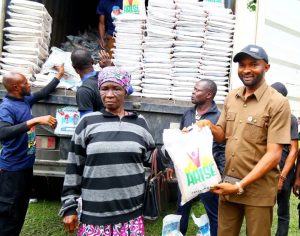
Akparawa Idorenyin Raphael donating food item to one of the beneficiaries in Ibiono Ibom local government area recently
The progressive expansion of the programme further demonstrates government responsiveness. From an initial distribution of 3,000 bags, the intervention grew to 4,000 bags and now stands at 7,000 bags per local government in the fourth phase. Such growth reflects both increased government commitment and an understanding of the realities confronting ordinary citizens.
Yet the food programme is only one component of a broader humanitarian architecture under the ARISE Agenda. Alongside food distribution, the administration has implemented social welfare initiatives, enterprise support programmes, healthcare interventions, educational assistance and economic empowerment schemes targeted at vulnerable populations.
The recently announced N31 billion economic empowerment programme, allocating N1 billion to each of the 31 local government areas, further demonstrates a shift from relief to sustainable economic empowerment. While food support addresses immediate needs, enterprise funding aims to help citizens create wealth, expand businesses and improve their livelihoods.
This combination of compassion and economic empowerment offers an important lesson in governance. Effective leadership is not measured solely by the number of roads constructed or buildings commissioned. It is equally measured by the ability to protect vulnerable citizens during difficult times while creating opportunities for long-term prosperity.
There are valuable lessons here for other states and even for national policymakers.
First, humanitarian programmes are most effective when they are institutionalized and data-driven. The use of the Social Register has improved targeting and accountability.
Second, social interventions work best when combined with broader economic development initiatives. Relief without empowerment creates dependency, while empowerment without relief may leave vulnerable populations behind.
Third, governance becomes more meaningful when citizens can directly feel the impact of public policy in their daily lives. For many families across Akwa Ibom, the ARISE Free Food Distribution Programme has transformed government from an abstract institution into a caring presence.
The intervention also reflects the broader philosophy of the ARISE Agenda, which places people at the centre of development. While major infrastructure projects continue across the state, including roads, healthcare facilities, schools, housing schemes and agricultural investments, the administration has maintained a deliberate focus on social protection.
As Akwa Ibom approaches the 2027 electoral cycle, many observers will inevitably assess Governor Umo Eno’s performance. Such assessments should be based not only on campaign promises but also on measurable outcomes. The evidence so far suggests a government that has invested simultaneously in infrastructure, economic growth and human welfare.
The sustained implementation of the ARISE Free Food Distribution Programme across 28 local government areas demonstrates consistency, commitment and administrative capacity. More importantly, it demonstrates empathy, a quality often missing in public leadership.
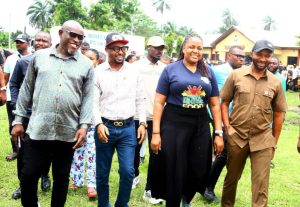
For many beneficiaries, the programme is not merely about bags of rice and beans. It is about dignity, inclusion and hope. It is about knowing that the government recognizes their struggles and is prepared to respond.
As the fourth phase nears completion across all 31 local government areas, the programme stands as one of the clearest examples of people-centred governance in contemporary Nigeria. It has provided immediate relief, strengthened social cohesion, stimulated local economic stability and reinforced public trust.
Ultimately, the strongest argument for granting Pastor Umo Bassey Eno, PhD, a second term may not lie in political rhetoric but in the lived experiences of ordinary citizens whose lives have been positively touched by his administration’s policies. From the elderly woman receiving food support in Itu to the struggling family in Ibiono Ibom finding temporary relief from rising food costs, the testimonies speak for themselves.
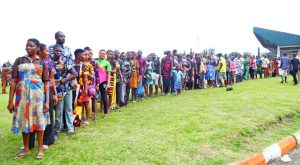
In governance, results matter. In humanitarian leadership, compassion matters. The ARISE Free Food Distribution Programme has shown that under Governor Umo Eno, both can work together to improve lives and build a more inclusive society.
#UmoEno So far, So good#AriseAgenda
#ARISEFreeFoodDistribution
#PeopleCentredGovernance
#HumanitarianLeadership
#FoodSecurity#AkwaIbomRising
#PastorUmoEno#ARISEAgendaWorks
Daniel, SA to the Governor on Media
Writes from Uyo, Akwa Ibom State
providencemaga@yahoo.com
By Lucy Daniel
A state does not become remarkable simply because it builds impressive projects. It becomes remarkable when those projects begin to change lives, reshape opportunities and create a story that others can see, understand and learn from.
That is the emerging story of Akwa Ibom under Governor Umo Eno and the ARISE Agenda.
At first glance, the ARISE Agenda may appear to be a familiar government development framework. But beyond the acronym lies a broader idea: that development must connect infrastructure with people, economic opportunity with inclusion, and government investment with a better quality of life.
This is increasingly becoming visible across Akwa Ibom.
From roads and aviation infrastructure to healthcare, agriculture, housing, education, skills development and technology, the State is gradually building an interconnected development ecosystem. More importantly, the story is beginning to travel beyond the borders of Akwa Ibom.
And that matters.
In today’s competitive world, states and cities are no longer judged only by what they possess. They are judged by how effectively they use what they have to create opportunities.
Akwa Ibom has enormous advantages, its location, agricultural potential, natural resources, tourism assets, human capital and relatively strong infrastructure base. But advantages do not automatically translate into prosperity. They must be connected by vision, investment and effective governance.
That is where the ARISE Agenda seeks to make a difference.
Beyond Projects, Building Connections
Perhaps the most important feature of the emerging development story is the connection between projects.
Consider the Victor Attah International Airport.
An airport is never just a terminal building. When properly integrated into the economy, it becomes a gateway for tourism, commerce, investment, business travel and human mobility.
The growing international orientation of the airport therefore has implications far beyond aviation. It can help connect Akwa Ibom businesses to wider markets, make the State more accessible to investors and strengthen its position as a destination for tourism and conferences.
The same logic applies to roads.
A road linking rural communities to urban centres is not simply infrastructure. It can shorten the distance between farmers and markets, reduce transportation costs and stimulate economic activity.
Healthcare infrastructure tells another story.
A modern hospital is not merely a building filled with equipment. It is an investment in human dignity, productivity and confidence. When citizens can access quality healthcare closer to home, families are protected from avoidable economic hardship and communities become more productive.
Agriculture, too, becomes more powerful when viewed as an economic chain rather than simply food production.
Seedlings, farmers, processing, transportation, markets and technology must work together.
That is the deeper meaning of an interconnected development agenda.
The Human Face of Development
Yet there is a danger in development communication.
Governments can become so focused on announcing projects that they forget the people behind the statistics.
The true story of development is not found in the ribbon-cutting ceremony. It is found in what happens afterwards.
It is the farmer who can now move produce more easily.
It is the young person who acquires a skill and discovers a new source of income.
It is the mother who can access healthcare without travelling hundreds of kilometres.
It is the entrepreneur who finds that better infrastructure makes it possible to expand a business.
It is the family that moves into decent housing.
These are the stories that give the ARISE Agenda its human meaning.
And these are also the stories that can travel beyond Akwa Ibom.
From Local Development to Global Visibility
The world is increasingly connected. A project in Uyo can become a subject of discussion in Lagos, Abuja, Accra, London or Dubai within hours.
But visibility alone is not enough.
The global audience is becoming more sophisticated. Investors want data. Development experts want measurable outcomes. Citizens want evidence. International media want stories that can be independently understood.
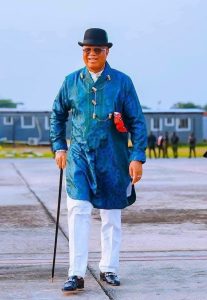
Governor Umo Eno of Akwa Ibom State
Therefore, Akwa Ibom’s communication strategy must continue evolving.
The State should not only tell people what has been built. It should increasingly demonstrate what those investments are producing.
How many businesses are benefiting?
How many jobs are being created?
How much travel time has been reduced?
How many farmers have gained access to markets?
How many young people have acquired employable skills?
How much investment is being attracted?
What is the measurable improvement in healthcare and education?
These questions do not diminish government achievements. They strengthen them.
Because the strongest advertisement for development is evidence.
A Nigerian Lesson
There is also a bigger national lesson.
Nigeria’s development cannot depend entirely on federal initiatives. States are critical laboratories where innovative ideas can be tested and adapted to local realities.
If Akwa Ibom succeeds in connecting infrastructure, agriculture, healthcare, human capital, technology and investment, other states should be able to study those experiences and adapt what works to their own circumstances.
That is how local development becomes national knowledge.
Akwa Ibom does not need to claim perfection. No government has it.
What matters is the willingness to build, measure, correct, improve and communicate honestly.
That is what transforms an administration’s programme into a development model.
The Question of Legacy
For Governor Umo Eno, the most important question will eventually be one of legacy.
Will the ARISE Agenda remain identified primarily with one administration, or will it become embedded in institutions, infrastructure, economic systems and public expectations?
The latter would be the greater achievement.
A truly successful development agenda should outlive political personalities. It should leave behind systems that continue to create opportunities even when the political actors have moved on.
That is why institutionalisation is as important as commissioning.
Buildings can be inaugurated. Roads can be commissioned. Programmes can be launched.
But institutions and economic systems are what sustain development.
Taking the Story Beyond Akwa Ibom
Akwa Ibom is therefore at an interesting point in its development journey.
The State is not simply trying to improve itself. It is increasingly positioning itself to be seen, connected and understood beyond its geographical boundaries.
The challenge is to ensure that the story remains bigger than political promotion.
Let citizens tell it.
Let entrepreneurs tell it.
Let farmers tell it.
Let investors tell it.
Let independent observers examine it.
Let the numbers speak.
When development is real, the people eventually become its most credible communicators.
The ARISE Agenda has the opportunity to become more than a state development programme. It can become a case study in how a sub national government connects physical infrastructure with human development and economic ambition.
But that opportunity comes with responsibility.
Akwa Ibom must continue building, measuring, communicating and improving.
Because the ultimate destination is not applause.
It is impact.
And when that impact becomes visible enough to be experienced by citizens, recognised by businesses and understood beyond the State, the development story of Akwa Ibom will no longer belong only to Akwa Ibom.
It will become part of Nigeria’s larger story of what is possible when vision is matched with purposeful action.
#UmoEno #AriseAgenda #AkwaIbom #GoodGovernance #Development #Investment #Infrastructure #HumanCapital #Nigeria
Daniel, SA to the Governor on Media
Writes from Uyo, Akwa Ibom State
providencemaga@yahoo.com
COMMENTARY
The Power of Partnership: How Collaboration Is Expanding Humanitarian Impact in Akwa Ibom
By Ekaette Okon Joseph
In Akwa Ibom State, Governor Umo Eno’s administration is expanding humanitarian support through a partnership model that pairs government coordination with outside expertise, funding and technology.
According to Commissioner for Humanitarian Affairs Princess Emem Ibanga, FCIPA, the model brings together faith-based organisations, development partners and the private sector to reach Persons with Disabilities, women, youth and other vulnerable groups across the state’s local government areas.
One example is the Fourth Thursday Assistive Mobility Clinic. Persons with Disabilities who are unable to walk undergo clinical assessments to ensure that every mobility aid provided matches their physical condition and mobility requirements. The clinic is provided free of charge, and beneficiaries make no payment at any stage.
Ibanga said the monthly outreach is fully funded by Governor Umo Eno, PhD, as part of his administration’s commitment to inclusion and dignity for Persons with Disabilities.
Skilled technicians trained through the Assistive Mobility Device Coupling Training, facilitated by The Church of Jesus Christ of Latter-day Saints in partnership with the state government, assemble, customise and adjust each wheelchair and walking aid to suit individual beneficiaries.
A total of 444 Persons with Disabilities have received wheelchairs and mobility devices through the partnership, following the donation of 263 wheelchairs and 181 walking aid devices by The Church of Jesus Christ of Latter-day Saints, Ibanga said. She said the donation reflects the Church’s commitment to supporting vulnerable groups through humanitarian service.
Ibanga said Governor Eno personally facilitated clearance of the consignments so the equipment could reach beneficiaries without delay.
According to Ibanga, physiotherapists from Uganda were engaged to train participants in international best practices in assistive device assembly and adaptation. She said the training gave younger participants a career path in rehabilitation services, a field still growing in Nigeria.
Ibanga coordinates these partnerships as Commissioner for Humanitarian Affairs. She said the Ministry works to align the interests of development partners, faith-based organisations, corporate institutions and government agencies around the ARISE Agenda vision of Governor Umo Eno.
That coordinating role was on display recently when Jobberman Nigeria’s leadership visited Ibanga at her office.
“I welcomed the delegation led by its Country Head of Programmes, Mr. Olamide Adeyeye, on a courtesy visit to our Ministry,” Ibanga said. “Our engagement focused on building stronger partnerships that will improve livelihoods and create more opportunities for vulnerable groups across the State.”
Ibanga said the discussion covered five priorities: expanding youth employment and employability programmes, supporting skills development and economic empowerment for young people, promoting inclusive opportunities for Persons with Disabilities, exploring Jobberman’s participation in the forthcoming Humanitarian Day and Humanitarian Roundtable, and aligning future programmes with the state’s humanitarian priorities.
She commended Jobberman Nigeria’s youth development work and acknowledged its grassroots impact in Akwa Ibom State since 2023, when the organisation began operating in the state.
“As a government, we recognise that meaningful and lasting development is achieved through collaboration,” Ibanga said. “We look forward to working more closely with Jobberman Nigeria to expand opportunities for our young people, strengthen livelihoods and improve the wellbeing of vulnerable citizens in line with the ARISE Agenda of His Excellency, Pastor Umo Eno, PhD.”
Ibanga said the state’s ARISE Free Food Security Programme also continues to support vulnerable households, part of what she described as a wider effort under the ARISE Agenda to treat humanitarian assistance as an ongoing system of support rather than one-off relief.
Ibanga said the Ministry is inviting corporate organisations, development partners and faith-based institutions to join the state’s humanitarian coalition and expand opportunities for vulnerable citizens across Akwa Ibom.

Gov Umo Eno calls for transparency in constituency empowerment programmes
POLICE RECOVERS WEAPON, STOLEN ITEMS FROM TWO SUSPECTS OF ALLEGED MACHETE ATTACKS, ROBBERIES IN UYO
AKWA IBOM POLICE COMMAND CELEBRATES CUSTOMER SERVICE WEEK AS CP AZARE REAFFIRMS COMMITMENT TO EXCELLENT SERVICE
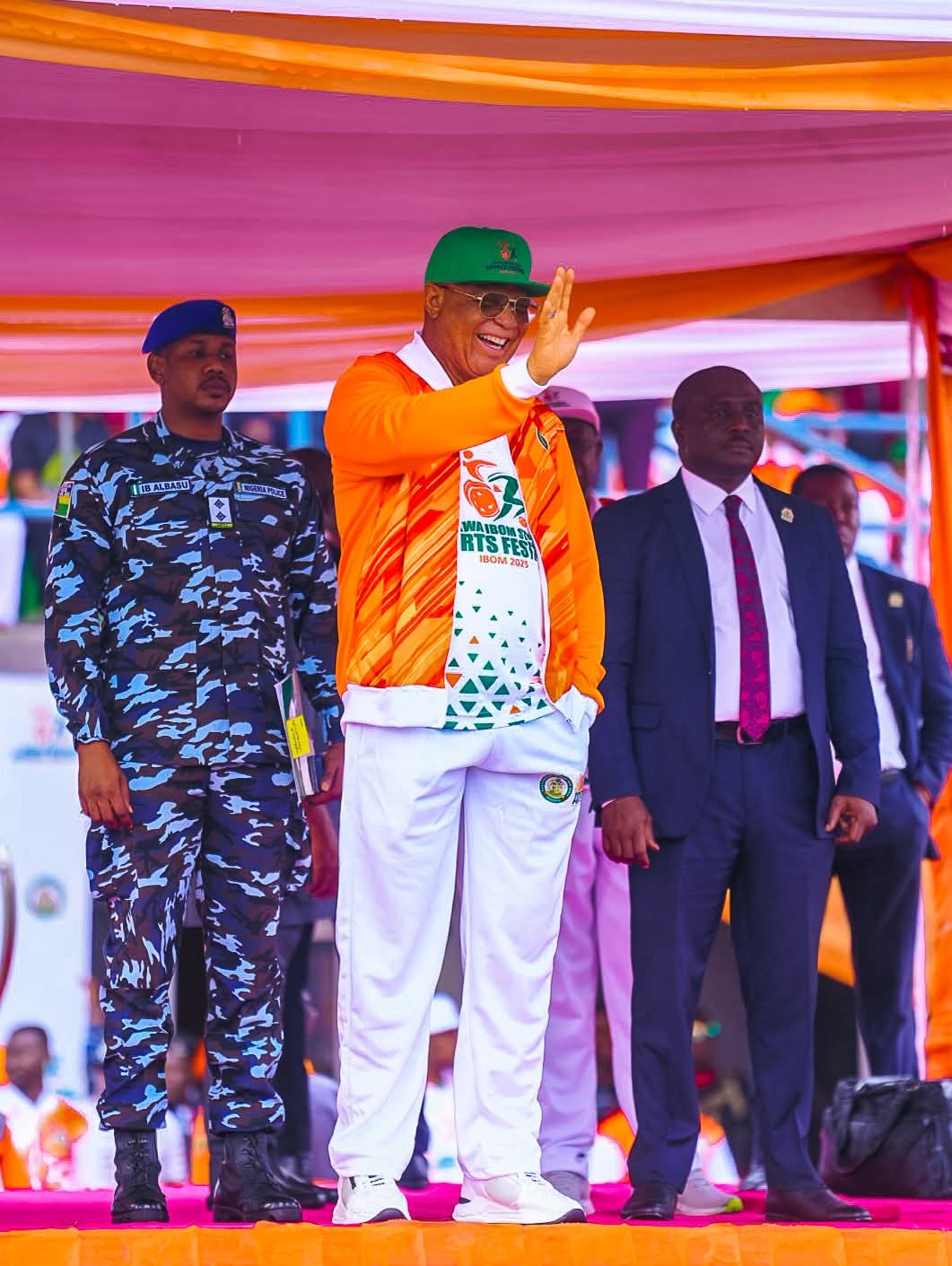
2026 AKWA IBOM SPORTS FESTIVAL: GOVERNOR UMO ENO’S BOLD STEP AT DISCOVERING TOMORROW’S SPORTS STARS TODAY

NYSC Batch B Stream II Orientation Camp opens August 28
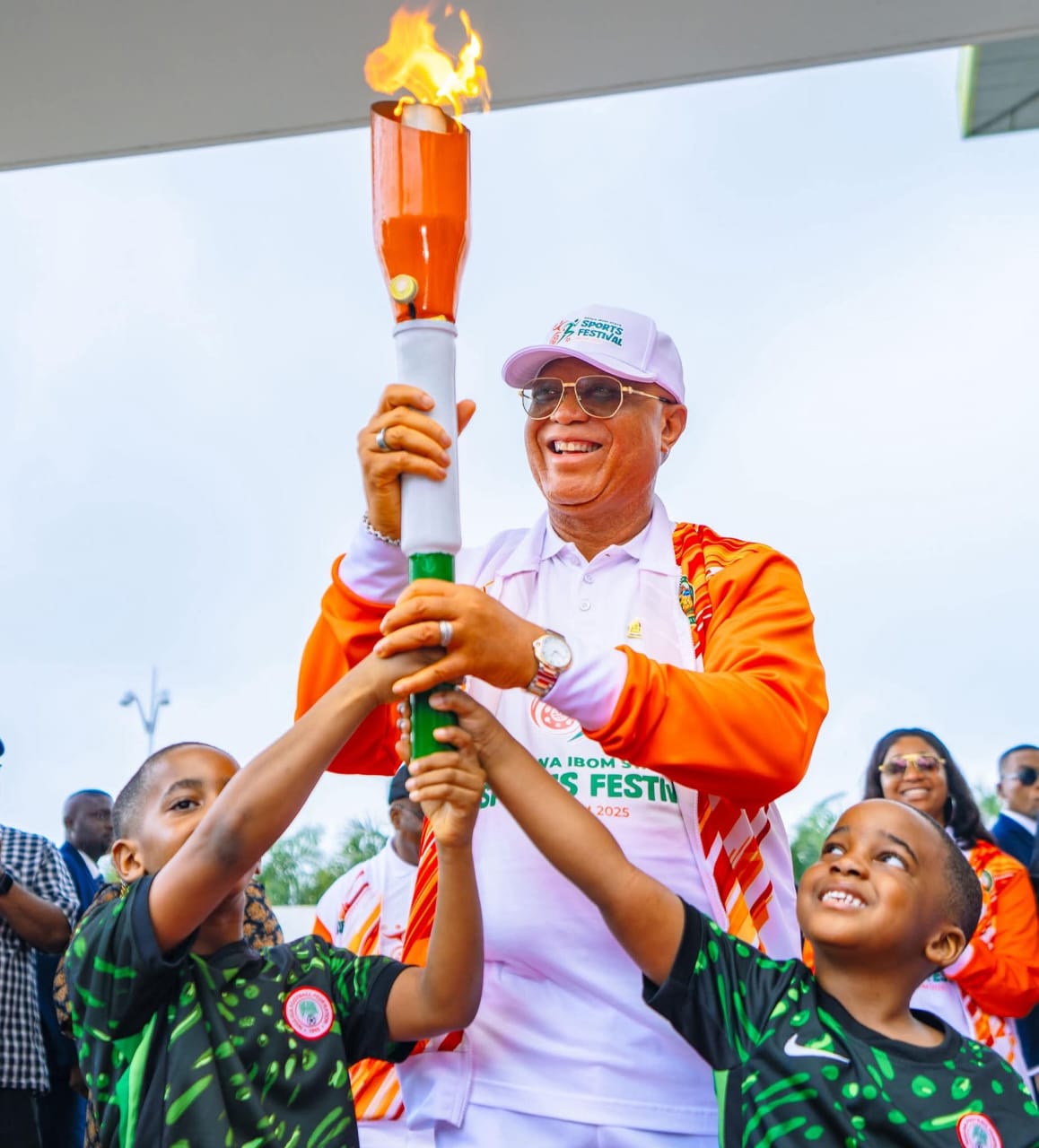
A’IBOM SPORTS FESTIVAL KICKS OFF SEPTEMBER 8
-
SPORTS2 months ago
2026 AKWA IBOM SPORTS FESTIVAL: GOVERNOR UMO ENO’S BOLD STEP AT DISCOVERING TOMORROW’S SPORTS STARS TODAY
-
NEWS2 years ago
NYSC Batch B Stream II Orientation Camp opens August 28
-
SPORTS1 year ago
A’IBOM SPORTS FESTIVAL KICKS OFF SEPTEMBER 8
-
 METRO2 months ago
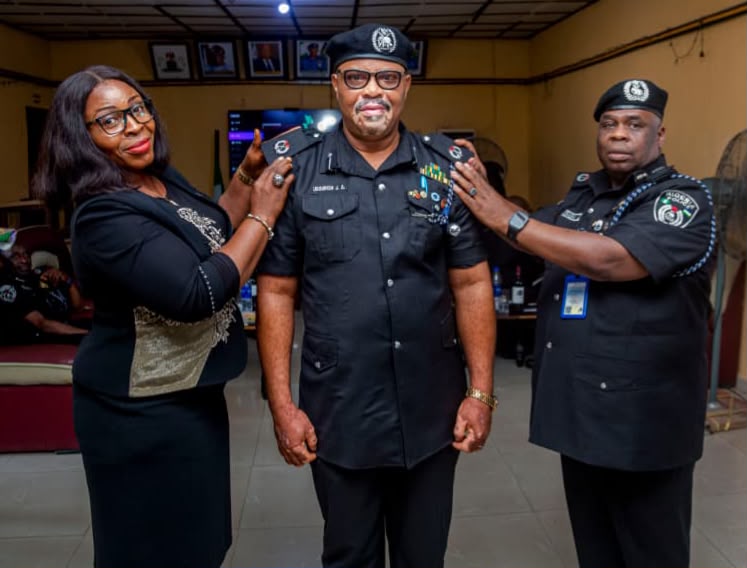
AKWA IBOM STATE POLICE COMMAND DECORATES TWO NEW ASSISTANT COMMISSIONERS OF POLICE, CONDUCTS HEPATITIS SCREENING FOR PERSONNEL
-
SPORTS1 month ago
2nd EDITION OF AKWA IBOM SPORTS FESTIVAL KICKS OFF SEPTEMBER 22 2026
-
 Crime1 year ago
Akwa Ibom Police Command Reels Out Emergency Numbers to the Public
-
 Crime2 months ago
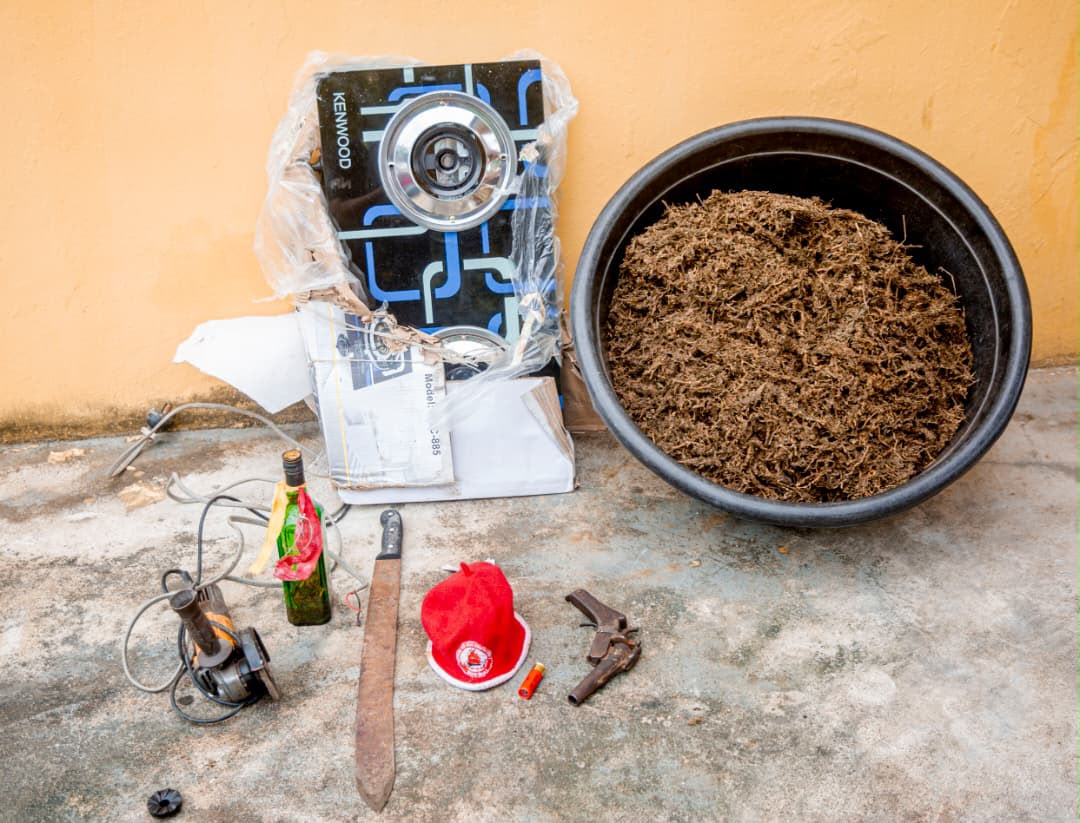
TWO SUSPECTED ARMED ROBBERS LINKED TO MURDER AND KIDNAPPING IN ETINAN IN POLICE NET
-
 SPORTS1 year ago
Akwa Ibom Sports Festival opens in Uyo